
Los Pinares from Cuarto Pelado to Capellanía
Route of 4 km. linear that passes through the high Mediterranean mountain in the oromediterranean bioclimatic floor. It begins in the mountain pass of Cuarto Pelado, on the road that joins Cantavieja with Fortanete. It is necessary to follow the yellow and white marks of the PR TE-73 short-distance trail, which connects this point with the Castillo del Cid, although the proposed ornithological route ends at the Capellanía, an excellent viewpoint next to the fixed surveillance post of the fire-fighting operation. There are 4 kilometers with little positive slope, about 150 meters. The route runs along a forest track through a dense and shady forest of Scots pine(Pinus sylvestris), accompanied by boxwood(Buxus sempervirens) and juniper(Juniperus communis). The path reaches a point between the dividing line of two valleys, where it will be interesting to make a stop to observe the panoramic view of the valley of the river Cañada, its landscapes, the farmhouses and the agricultural and livestock activity of the territory. A little further on, follow a path that opens up to the left through the thick undergrowth to descend gradually to a hill where the municipalities of Fortanete and Cañada de Benatanduz meet. From here the path ascends until it reaches the shady area of La Capellanía, an interesting environment full of grasslands and thorny borders more typical and common in Central European areas. Later, a path to the left of the main road will bring us closer to the end of the route. Along the way you will be able to discover some of the most common and interesting birds of the route, through QR links.
We are located in the highest areas of Maestrazgo, south of the Iberian mountain range. Biogeographically, we are immersed in the Mediterranean region, but the environmental and climatic conditions of the mountains favor the presence of habitats similar to those present in higher latitudes, more typical of the Eurosiberian region. This interweaving of environments favors a unique avifauna, with a large number of typically Mediterranean species, but with an interesting number of birds that usually breed in more northerly areas. They present here, their southern limits of geographical distribution and are on the edge of their ecological requirements, becoming good bioclimatic sensors in the face of global change scenarios. Among them we can highlight the red-backed shrike and the willow warbler, both summer birds and always among the thorny fringes, or the common accentor that breeds in the clearings of pine forests with junipers and creeping junipers.


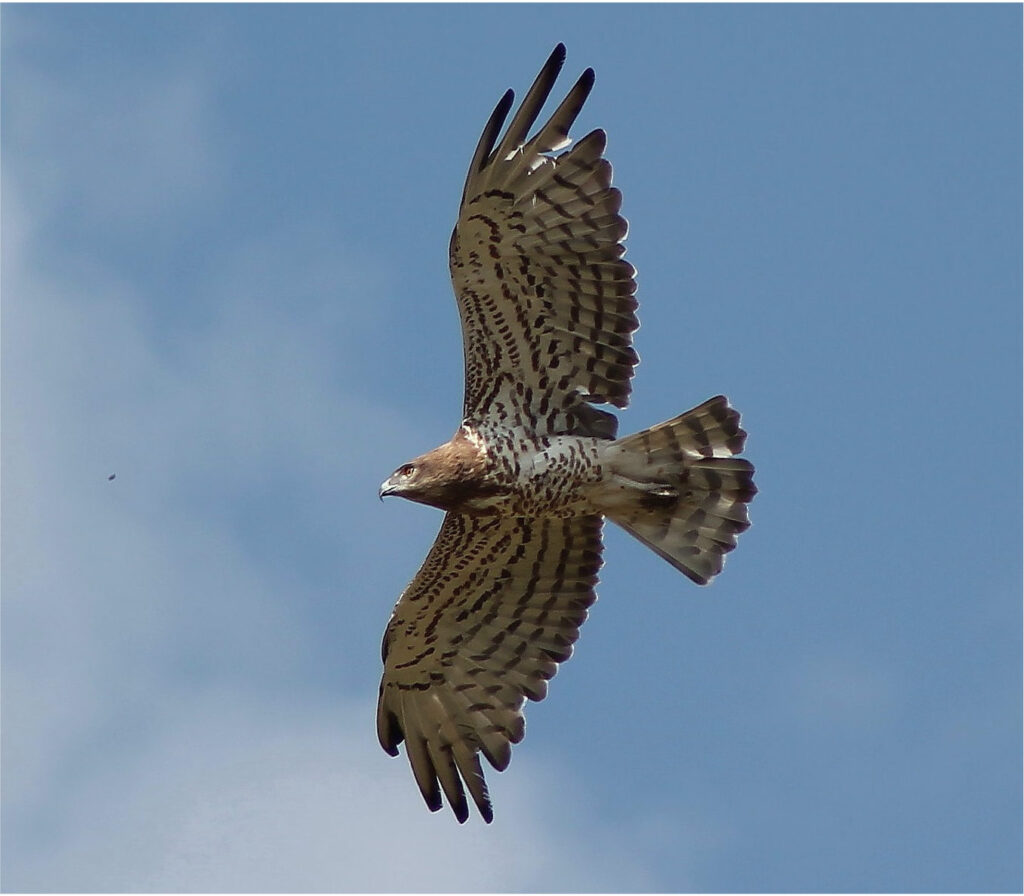
Forest birds
The bird community in these wooded environments is composed of numerous species. The coal tit and the crested tit, both belonging to the parid family, are perhaps the most abundant in the oromediterranean pine forests. An exclusive bird of pine forests is the crossbill, a unique bird for its adaptation of the beak to feed on pine nuts and for its reproductive plasticity, capable of breeding at any time of the year. The greenfinch is an endemism of the mountain systems of southwestern Europe with a very metallic song and calls. Other common birds are the chaffinch, robin, song thrush, nuthatch, nuthatch, wren, wren, woodpecker, blackbird, blackbird, goldcrest and rock bunting.
Among those that visit us during the spring are the Eurasian wryneck, tree pipit, common cuckoo, European oriole, pied flycatcher, gray flycatcher, warbler or common nightingale.
Forest birds of prey complete this community. The goshawk, the sparrowhawk and the buzzard are common all year round, while the short-toed snake-eagle and the booted eagle visit us in spring. Other diurnal birds of prey such as the European honey buzzard and the black kite are common. During the night it is the turn of the nocturnal raptors, more detectable by their songs. The most characteristic is the tawny owl.

Main birds detectable along the route

Crossbill(Loxia curvirostra)
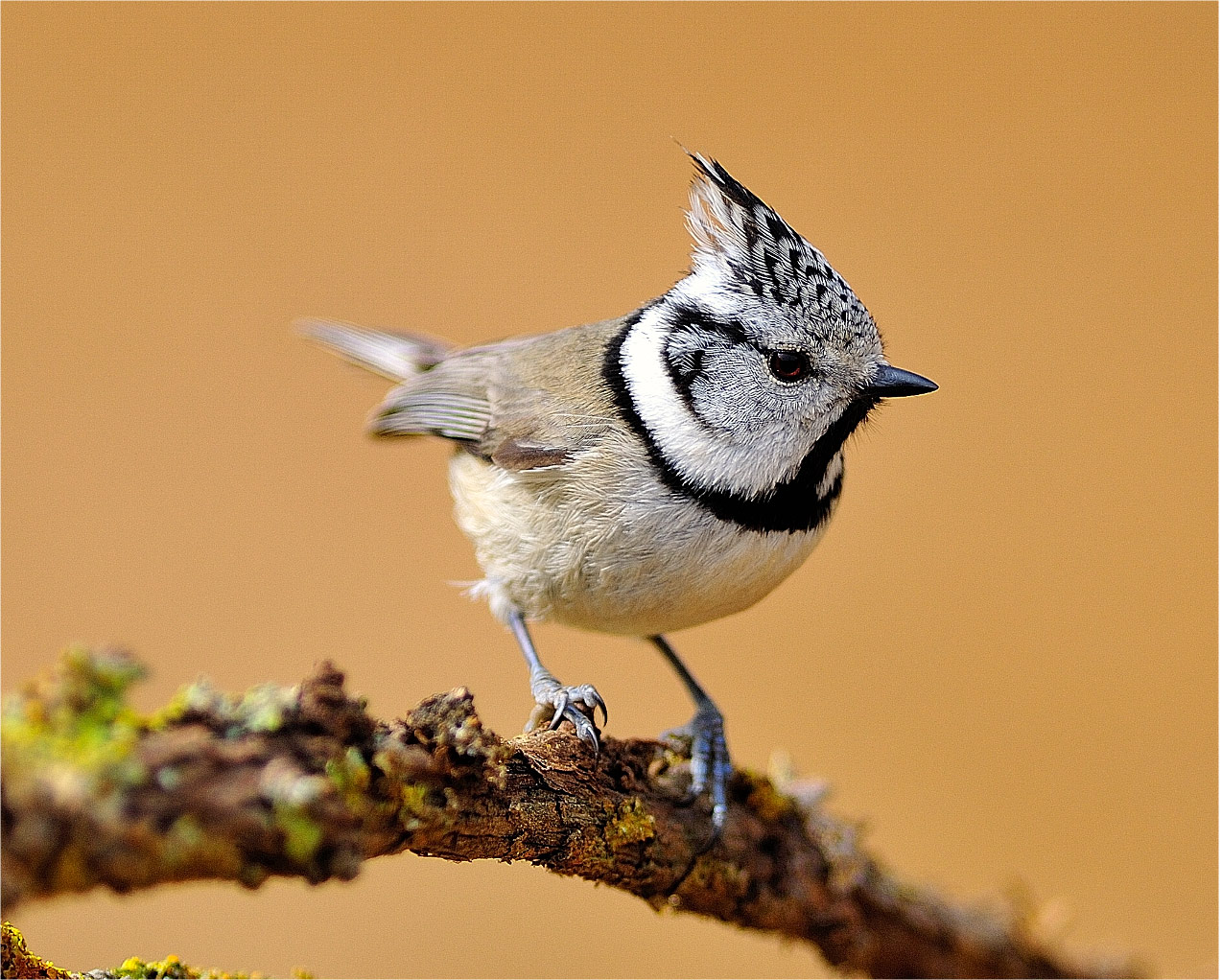
Crested Tit(Lophophanes cristatus)

Nuthatch(Sitta europaea)

Escribano montesino(Emberiza cia)

Red-backed Woodchat Shrike(Lanius collurio)

Blackburnian Warbler(Sylvia communis)

Common Accentor(Prunella modularis)

Goldcrest(Regulus regulus)
great tit, crested tit, crested tit, crossbill, greenfinch, chaffinch, chaffinch, robin, song thrush, nuthatch, woodcreeper, wren, wren, great spotted woodpecker, Iberian woodpecker, blackbird, blackbird, goldcrest, rock bunting, crow, raven, goshawk, sparrowhawk, buzzard, short-toed eagle, booted eagle, European honey buzzard, black kite, tawny owl, red-backed shrike, southern grey shrike, willow warbler, blackcap, blackcap, blackbird, white-winged blackbird, alpine accentor and goldcrest.