
Ornithological route of Cantavieja
Simple circular route of 5 km, with an approximate positive difference in altitude of 230 m. Suitable for all nature lovers and bird lovers in particular, due to the large number of different ecosystems it crosses in such a small space. The ornithological route begins in Cantavieja and after a small urban section, the path crosses the road to descend to the Cantavieja River along an old zig-zag path that communicated and communicates the towns of Cantavieja and Tronchón. Used since ancient times for the transit of people on foot and pack animals, it has also been used as a livestock route for transhumance, an activity of great importance for the territory. A powerful bridge of medieval origin and a riparian forest awaits us to save the river and lead us to the fulling mill. After a few meters we reach a track and at this point we leave the GR 8 that connects the towns of Cantavieja and Mirambel, to turn left. The forest track crosses a forest represented by kermes oaks (Quercus ilex), oaks (Quercus faginea) and junipers (Juniperus oxycedrus). After overcoming it, you reach another track that connects Cantavieja with Tronchón by car. We pass over the Molino de Altaba and after a few meters we take a path that goes off to the left to go to the Molino Alto, there we must first cross the Ojal ravine that originates a beautiful waterfall and immediately again, the Cantavieja river, to start the return to the village. At this point we take the GR 8 towards Cantavieja that comes from the neighboring town of Fortanete. This section runs along the shady side of the slope crossing large rocky cliffs and old terraces, where numerous shrubs and bushes have flourished, such as boxwood(Buxus sempervirens), hawthorn(Crataegus monogyna), blackthorn(Prunus spinosa), currants(Ribes sp.), wild rose bushes(Rosa sp.), honeysuckles(Lonicera sp.) and several species of maples that give a special color in the autumn season. Along the route you will find several QR codes that will direct you to learn about the songs and biology of some of the most unique birds along the route.


Grasslands and shrublands
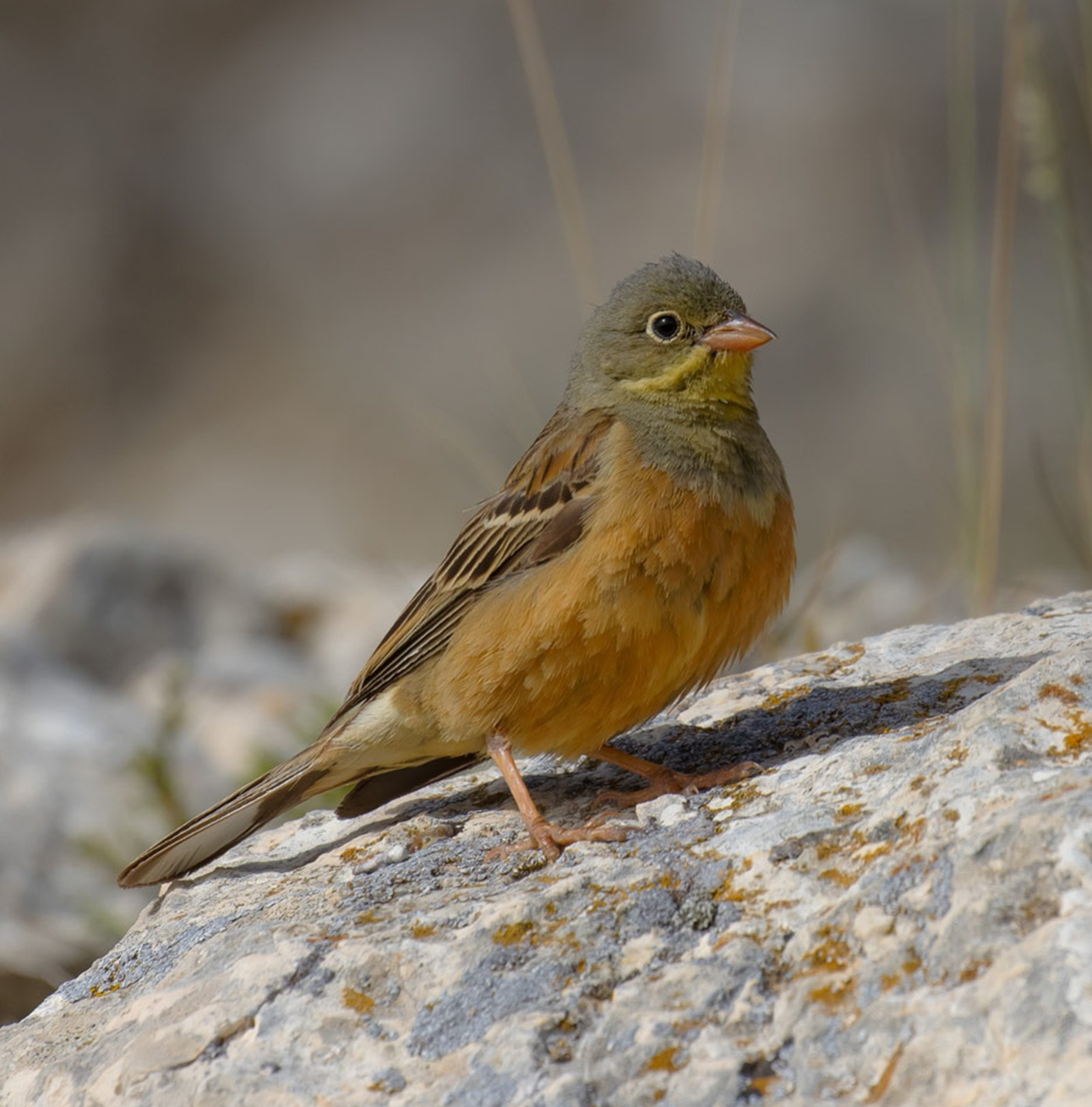
After the abandonment of the terraces, in the banks, borders and pastures the vegetation follows the steps of the ecological succession and numerous shrubs and bushes develop, offering endless opportunities for birds. They are protection, rest, food and breeding grounds. Among them the robin, the blackbird, the black bunting , the common stonechat, the greenfinch, the chaffinch or the great tit are present all year round. In the summer period, many more birds are present, such as the hortolan bunting, the black-winged warbler, the polyglot warbler, the cuckoo or the European blackbird. Both the cuckoo and the cryalo have somewhat special reproductive cycles, since both species practice “nidoparasitism”. The female cuckoo lays eggs in nests of smaller birds, and once the chicks hatch they are fed by the adoptive parents and expel the eggs of the parasitized species from the nest. In the case of the créalo it is similar, it has a predilection for parasitizing corvids, such as the picaraza, but it does not expel the eggs or chicks from the nest, but because it has a faster development, it eliminates them by asphyxia or starvation.



Riverside forest
Poplar trees(Populus nigra), poplar trees(Populus nigra), willows(Salix sp.) and elms(Ulmus minor), along with a varied border of shrubs are the main actors in this environment, adapted to live with the constant edaphic humidity offered by the river. Wren, waders, blackcaps, warblers, warblers, common nightingales, gray flycatchers and orioles are common species. The woodpeckers, colloquially known as woodpeckers, more typical in forest environments, find in the poplars and twigs a valuable niche to reproduce. So much so, that on the banks of the Cantavieja river the 4 species of picidae that can be observed in the territory can be detected. The Iberian woodpecker, the woodpecker, the common wood pecker and recently the lesser spotted woodpecker are colonizing the area.
Quercíneas Forest
Unique forests, as during the last centuries they have been heavily intervened by human activity for various uses. Nowadays, they are gradually gaining ground in the lower altitude parts of the Maestrazgo. They are home to a number of typical birds that select these masses to breed and raise their offspring. These include: the resident blue tit and the summer warblers, the chiffchaff warbler and the subalpine warbler. The undisputed king of these forests is the cock-of-the-mountain or jay(Garrulus glandarius) in charge of dispersing the acorns inside and in adjacent areas of the forest.


Rocky cuts
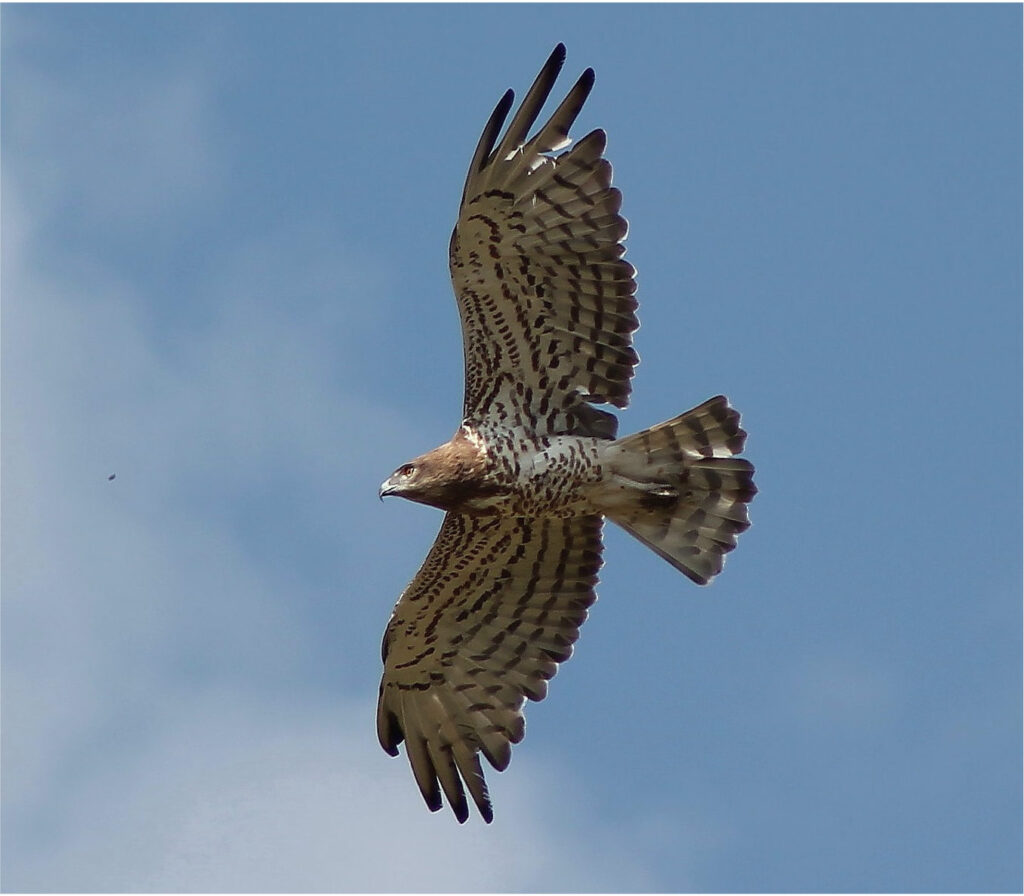
The fluvial erosion of the Cantavieja River over time has generated an abrupt canyon with numerous limestone walls that are used by a motley cohort of birds. Large birds of prey such as the golden eagle, the griffon vulture, the Egyptian vulture, the peregrine falcon or the eagle owl of crepuscular and nocturnal activity, use them as nesting sites. Other smaller birds present are the red-billed chough, the solitary rock thrush or the red rock thrush. The king swifts and the rock thrush take advantage of the aeroplankton that usually rises in the rocky cliffs with the thermal currents as a source of food.
Robin, Blackbird, Blackbird, Cirl Bunting, Rock Bunting, Rock Bunting, Common Stonechat, Common Chaffinch, Chaffinch, Great Tit, Garden Bunting, Black-winged Warbler, Melodious Warbler, Cuckoo, Common Crane, Blue Tit, Bonelli’s Warbler, Willow Warbler, Short-toed Treecreeper, Jay, Wren, Blackcap, warbler, common nightingale, common nightingale, gray flycatcher, Iberian woodpecker, great spotted woodpecker, black woodpecker, lesser spotted woodpecker, oriole, red-billed chough, solitary rock thrush, red rock thrush, common swift, Alpine swift, house martin, barn swallow, rock thrush, golden eagle, griffon vulture, Egyptian vulture, peregrine falcon and eagle owl.