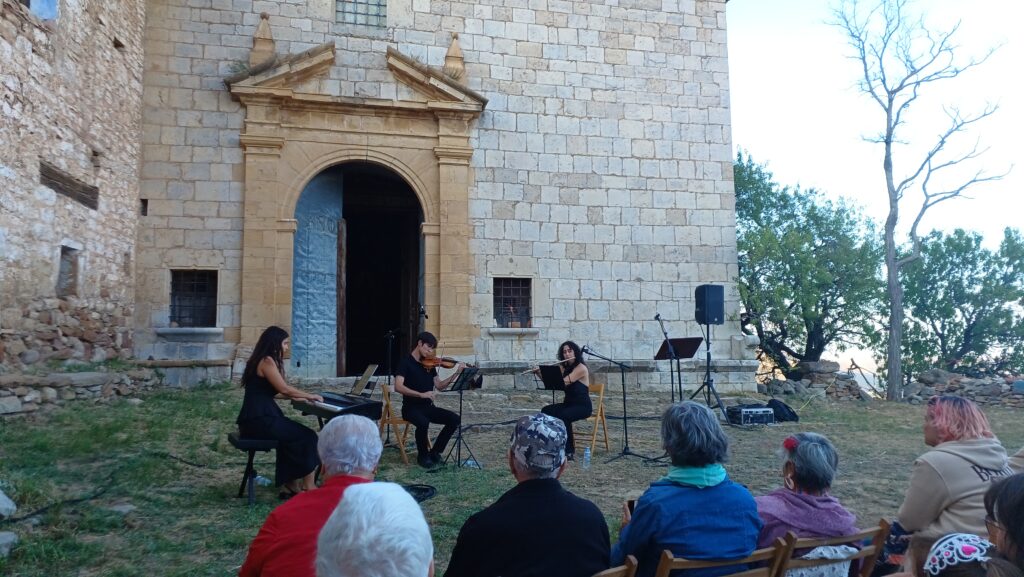
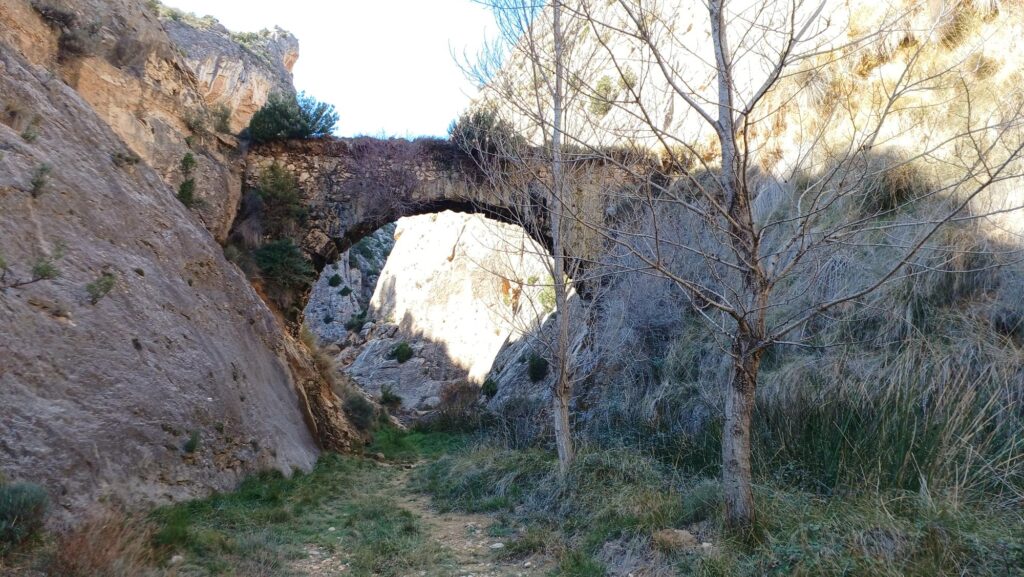
This year 2025 the Gran Recorrido GR 8 trail celebrates 35 years since its inauguration in Fortanete on June 17, 1990. More than three decades in which it has guided thousands of hikers through some of the most beautiful and unknown landscapes of Teruel. A route that not only unites villages and regions, but also nature, history and culture.
What are RMs?
The acronym GR refers to Senderos de Gran Recorrido, routes marked with white and red marks that usually exceed 50 km and can be done in several days. These are official itineraries, approved by the Spanish Federation of Mountain Sports and Climbing (FEDME), designed for walking and to discover landscapes of great natural and cultural value.
Birth of the GR 8
The GR 8 was created in 1990 as part of the Aragonese network of trails, with the aim of linking the southern regions of Teruel and linking them with other national and international routes. Since then, it has been a real backbone for hiking in the province, consolidating itself as an essential itinerary for mountain lovers.
Connections with other RMs
The GR 8 is not an isolated path:
- At its northern end, in Camarena de la Sierra, it connects with the GR 10, which crosses the Peninsula from Valencia to Lisbon.
- To the south, in Beceite, it connects with the GR 7, part of the European route E4, which runs through Spain, France and Greece.
- It is also interconnected with other local and regional trails that allow to extend or shorten stages.
Stages and variants
The GR 8 starts in Beceite and ends in Camarena de la Sierra. It crosses Teruel from north to south, passing through most of the villages of Maestrazgo, many of which have great charm. Its main stages in Maestrazgo territory are:
- Aguaviva – Las Planas de Castellote
- Las Planas – Bordón
- Bordón – Tronchón
- Tronchón – Mirambel
- Mirambel Cantavieja
- Cantavieja – Fortanete
- Fortanete – Valdelinares
In addition, it has variants that allow you to explore unique sites such as the Órganos de Montoro or the impressive waterfall of the Pitarque River.
The GR 8.1.
- Las Planas – La Algecira
- La Algecira – Cuevas de Cañart
- Cuevas de Cañart – Windmills
- Mills – Ejulve
- Ejulve Villarluengo
- Villarluengo – Pitarque
- Pitarque – Cañada de Benatanduz
- Cañada de Benatanduz – Fortanete
The GR 8.2.
- Cantavieja – La Iglesuela del Cid
- La Iglesuela del Cid – Mirambel
GR 8 values
Walking this trail is an opportunity to immerse yourself in:
- Landscapes: steep mountain ranges, ravines, pine and juniper forests, and rivers with crystalline waters.
- Historical heritage: medieval villages such as Mirambel, Cantavieja or La Iglesuela del Cid, declared Historic Sites.
- Living culture: traditions, gastronomy and ways of life linked to the mountains.
- Biodiversity: fauna such as the golden eagle, the griffon vulture or the mountain goat.
Recommendations for touring
- Plan the stages according to your physical condition, available time and accommodations.
- Check the weather, especially in winter and spring.
- Pack well: hiking shoes, layered clothing, water and sun protection.
- Respect the signage and the environment, following the leave-no-trace philosophy.
- If you prefer a guided experience, there are active tourism companies in Maestrazgo that offer organized routes.
Thirty years later, the GR 8 is still a red and white thread that sews nature and heritage. A trail that invites you to walk slowly, discover calmly and let yourself be carried away by the magic of Maestrazgo.
More information about stages and lodging at: www.turismomaestrazgo.org
Route guidance company: https: //theeyeisdelighted.com/